THE NECROPOLIS OF PANTALICA
The Necropolis of Pantalica is a vast and evocative naturalistic-archaeological area, whose name derives from the ancient Greek "pantalithos," meaning "all stone" or "place of stones."
The Necropolis of Pantalica is a vast and evocative naturalistic-archaeological area, whose name derives from the ancient Greek “pantalithos,” meaning “all stone” or “place of stones.”
Declared a UNESCO World Heritage Site in 2005, understanding the genesis of this extraordinary place requires going back long before Greek colonization—several millennia earlier—when southeastern Sicily was inhabited by various populations, including early Homo Sapiens settlements. Pantalica reached its peak power during the Bronze Age, a time when the cities of classical Greece were yet to be born and the Mycenaean people sailed the seas. Over the centuries, it passed through various cultural phases:
A first phase (13th century BC) saw a great shift as settlements moved from the coast toward the more rugged and easily defensible inland areas, driven by priority defense needs.
The second phase (11th-10th century BC) was a complex period marked by the end of Mycenaean influence and the arrival of the Phoenicians in the Mediterranean.
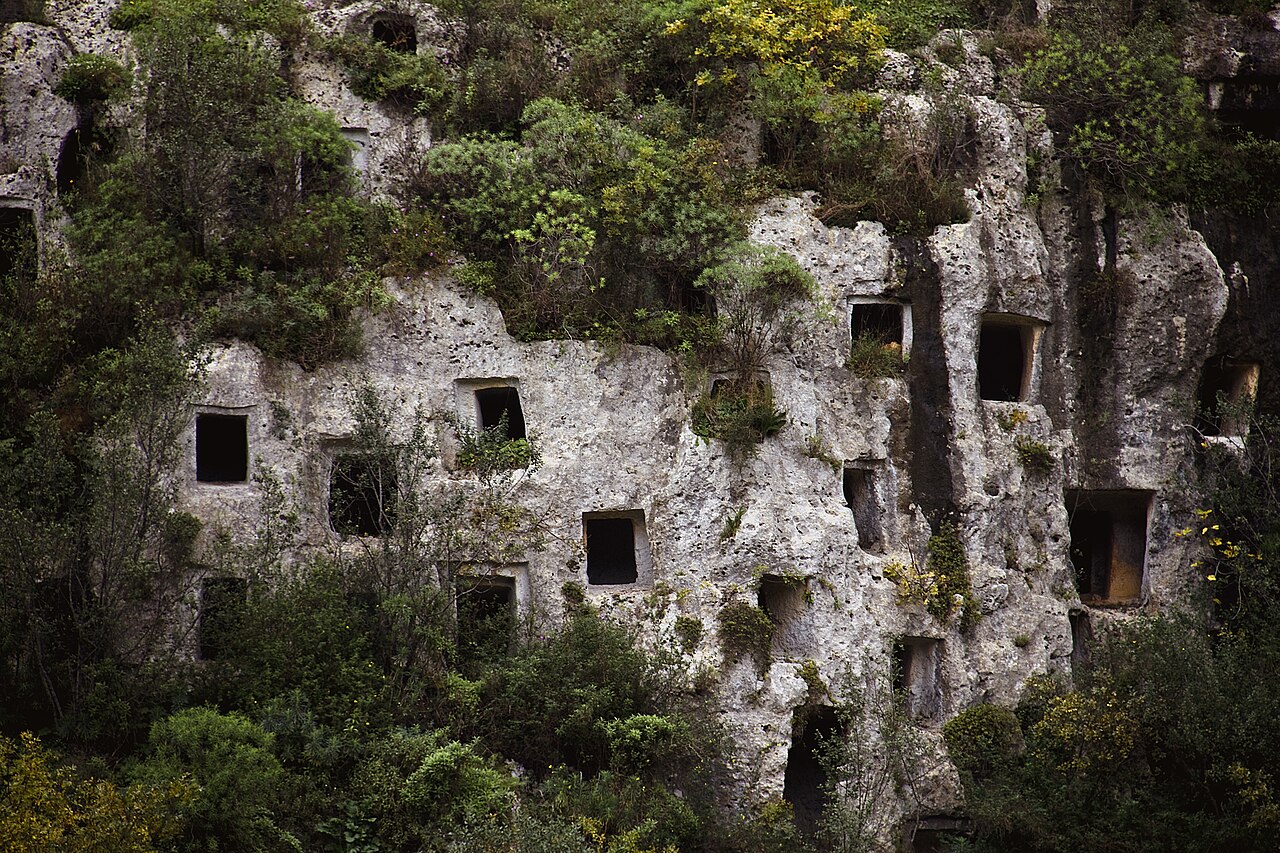
From the mid-9th century BC, about a century before the founding of Syracuse, Pantalica experienced a period of renewed splendor, evidenced by the necropolises of Filiporto, Cavetta, and the South, featuring artificial cave tombs and short dromos (corridors) on the rocky ledges.
After about 15 centuries of oblivion, Pantalica was re-inhabited in the Byzantine era (6th-7th century AD) as a refuge against Arab invasions, which led to a ruralization of the site, especially after the fall of Syracuse in 888 AD.