THE ANAPO VALLEY
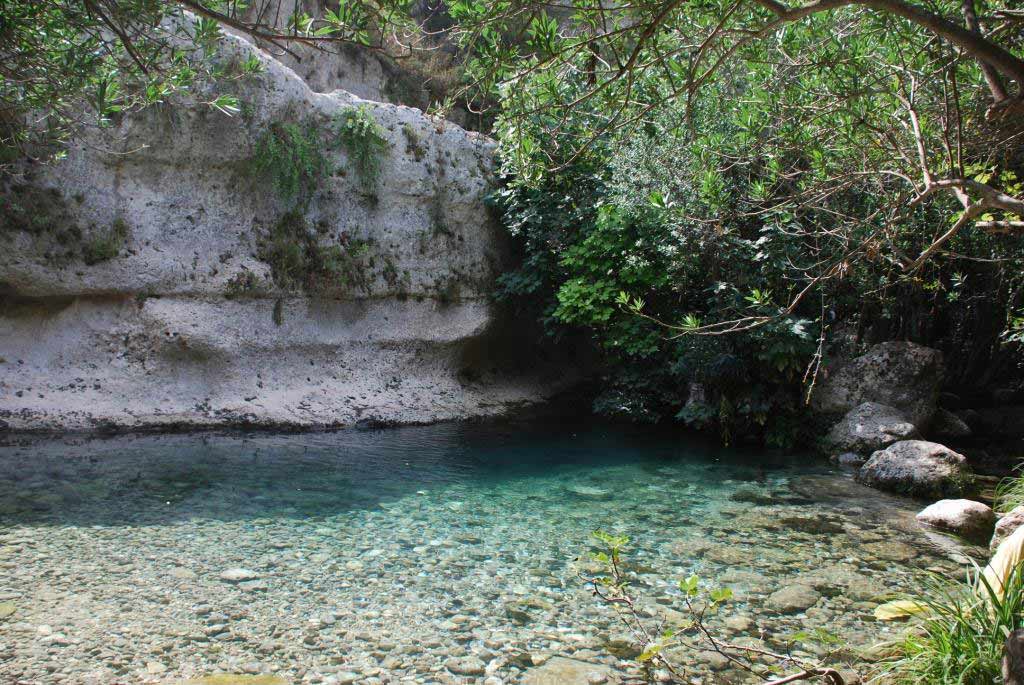
The Anapo River, from the Greek word for "invisible," rises at 990 meters from the Guffari springs on Mount Lauro and flows for 40 km, carving spectacular canyons known as "cave."
The Anapo River, from the Greek word for “invisible,” rises at 990 meters from the Guffari springs on Mount Lauro and flows for 40 km, carving spectacular canyons known as “cave.”
Over millions of years, erosive action and the tectonic movements of the African plate have shaped vertical walls and winding meanders, creating fascinating wild landscapes that stand in exceptional contrast to the agricultural scenery of the plateau. The river, which flows year-round, also traverses Miocene geological formations (Ragusa formation), from the blue-grey calcareous marls of Palazzolo Acreide (Tellaro formation) to powerful calcareous-marly banks rich in microfauna and marine fossils.
Along its course, nature merges with history: after fueling the steam trains of the ancient Syracuse-Vizzini railway, the Anapo brushes against the Necropolis of Pantalica—a majestic prehistoric honeycomb of thousands of tombs—and evocative karst caves adorned with stalactites, such as the “Bat Cave” (Grotta dei Pipistrelli).
The geological journey culminates southeast of Sortino, between the volcanic rocks of the Fusco district and the brecciated limestones of Saramenzano. The journey ends in the Great Harbor of Syracuse, where the Anapo meets the Ciane River and its rare, wild-growing papyrus.